Optimizing Workspaces with Portable Smart Nebulizer Humidifier
 Maya ChenContributing Editor
November 8, 2026. This analysis evaluates the technical efficacy of targeted misting for localized humidity control in shared workspaces. It serves professionals seeking to mitigate the dehydrating effects of commercial HVAC systems without impacting their colleagues' microclimates.
The Failure of Centralized Climate Control
The conventional wisdom says that modern office ventilation systems are designed for human comfort, yet they frequently operate at relative humidity levels below 20%. This atmospheric dryness causes systemic issues ranging from ocular fatigue to respiratory irritation. According to New York Magazine’s Strategist, most office-bound professionals require personal solutions like USB-powered humidifiers because floor-wide systems prioritize temperature over hydration. The common mistake is attempting to humidify an entire room with a small device; data from Cuttles indicates that personal desk humidifiers are only meant for close-range use, typically within a two-foot radius. Most consumer-grade desktop units fail because they rely on evaporative wicks that harbor bacteria or loud fans that disrupt concentration. In a shared environment, the goal isn't to change the room's dew point, but to create a localized zone of moisture that interacts directly with the user's immediate breathing space. When you consider that a standard office cubicle provides approximately 50 square feet of space, a large-scale humidifier is an inefficient allocation of energy and water. Instead, the focus must shift to high-frequency vibration technology that delivers moisture without the residual dampness that ruins paperwork or electronics. This is particularly relevant for those who already utilize a silent personal humidifier for office desk to maintain focus during high-intensity tasks.
Technical Precision of the Portable Smart Nebulizer Humidifier
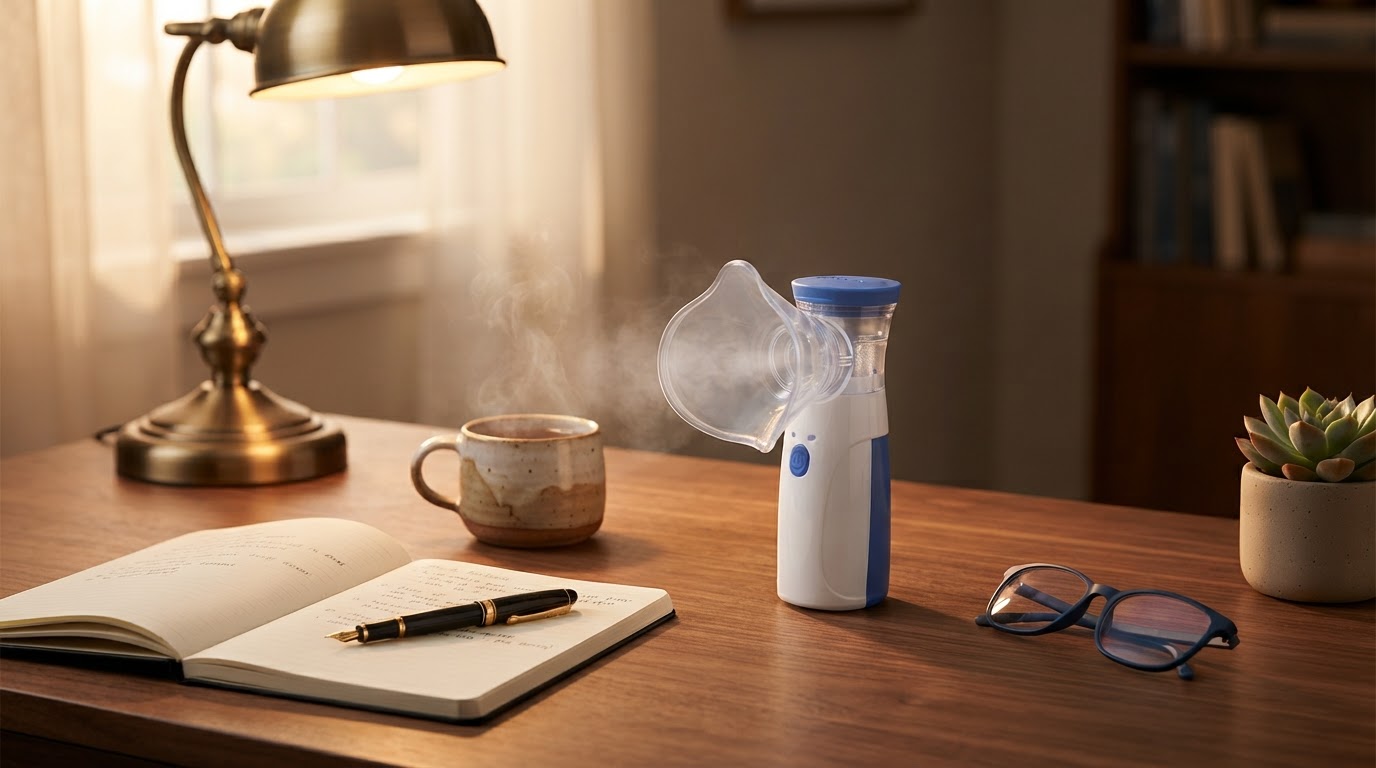
Here’s the part nobody talks about: most personal humidifiers are merely toys that lack the precision of medical-grade delivery systems. The Portable Smart Nebulizer Humidifier differentiates itself by employing a quiet mesh nebulizer system rather than a standard ultrasonic transducer. While a basic cool mist humidifier produces heavy droplets that fall quickly, the mesh technology in this device creates a finer, more buoyant mist that stays suspended in the personal breathing zone longer. This is the same technology utilized in a handheld nebulizer for kids or for elderly users requiring targeted respiratory support. Run the math: a standard USB-powered mini humidifier might output 30ml of water per hour, but if the droplet size is too large, 80% of that moisture settles on your desk surface rather than entering your airways. The Portable Smart Nebulizer Humidifier optimizes this ratio. Because it is a cordless mist humidifier, it eliminates the cable clutter that typically plagues modern workstations. Its smart connectivity allows for precise scheduling, ensuring the device isn't depleting its reservoir while you are away at meetings. For those who transition between a home office and a corporate headquarters, the form factor mirrors a portable nebulizer for travel, providing a consistent environmental baseline regardless of the building's infrastructure. It functions effectively as a personal steam inhaler humidifier without the risk of burns associated with heating elements, making it a safer profile for dense office layouts.
A Framework for Desk-Based Humidification
Selecting a device for a professional setting requires a departure from home-use criteria. You are not looking for room coverage; you are looking for directional accuracy and noise suppression. A silent portable humidifier for sleep might work in a bedroom, but the office requires a device that can withstand constant movement and varying power sources. When auditing your workspace requirements, use the following technical checklist to ensure the device meets the demands of a professional environment:
- Acoustic Output: The device must operate below 30 decibels to avoid triggering cognitive distraction for the user or neighbors.
- Power Source: Prioritize units that offer internal batteries or USB-C compatibility to maintain a clean desk policy.
- Mist Density: Ensure the unit utilizes vibrating mesh technology to prevent condensation buildup on computer hardware.
- Automation: Look for app-controlled features that allow for remote shut-off and humidity sensors to prevent over-saturation.
- Maintenance: The reservoir and mesh head must be easily accessible for daily cleaning to prevent the dispersal of mineral dust or bio-films.
Shop Portable Smart Nebulizer Humidifier here
Sources
- My Sculptural Desk Humidifier Quenches My Skin All Day Long
- Tips for Your (Home) Office: Do Desk Humidifiers Work? - Heather Bien
- Humidifier for Office Desk: What Actually Works in 2026 - Cuttles