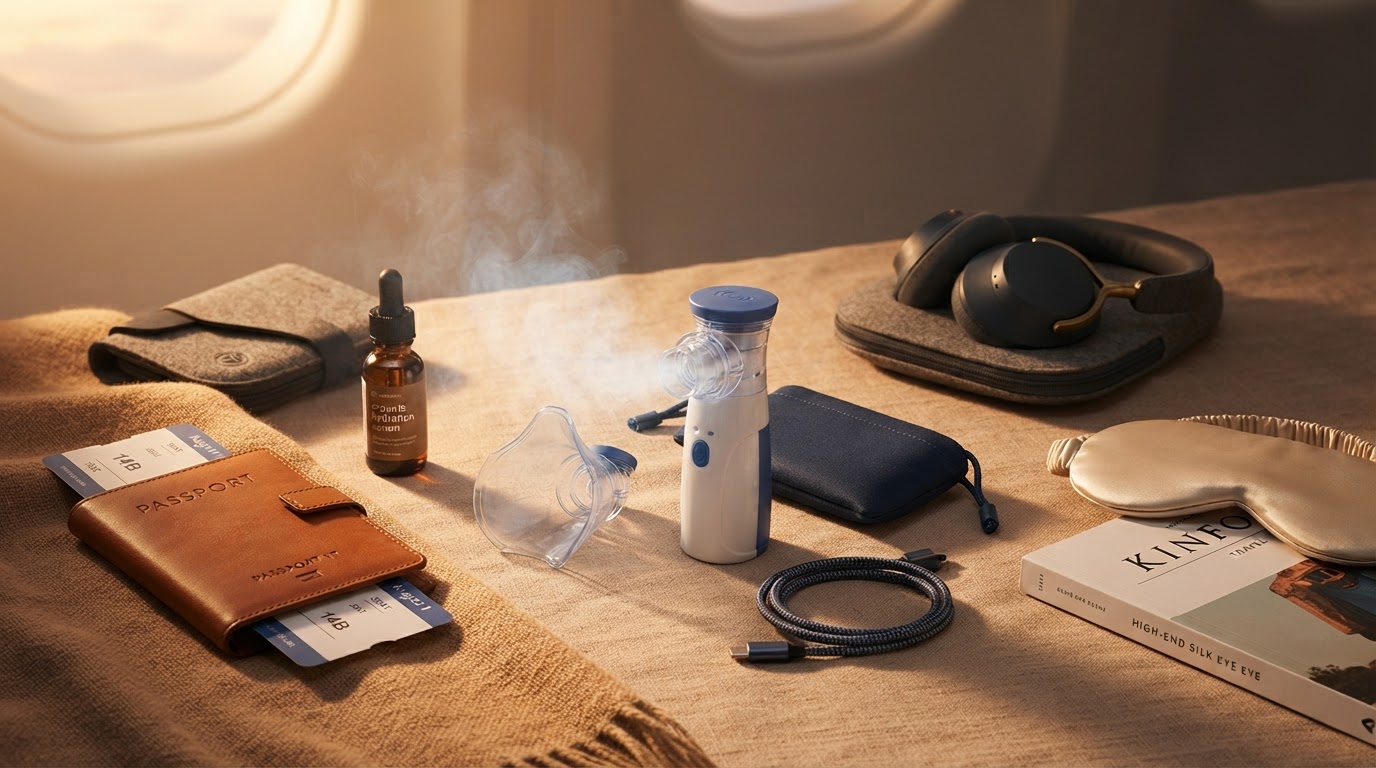
Can I Use Portable Smart Nebulizer Humidifier on a Flight?
July 17, 2026 — Passengers can typically use the Portable Smart Nebulizer Humidifier on flights as a personal wellness device, provided it is operated in battery mode or via a standard 5V USB port and adheres to airline-specific electronic device policies.
Air travel presents a unique physiological challenge: cabin humidity levels often drop below 20%, significantly lower than the 30-50% range recommended for respiratory comfort. Frequent flyers use the Portable Smart Nebulizer Humidifier to create a localized micro-climate of moisture. This device integrates power source compatibility with targeted mist delivery.
How does the Portable Smart Nebulizer Humidifier handle dry cabin air?
The Portable Smart Nebulizer Humidifier combats low cabin humidity by using vibrating mesh technology to create a fine, targeted mist that does not saturate the surrounding seating area. Unlike traditional ultrasonic humidifiers that may be bulky, this device is designed for handheld use, allowing for direct inhalation or close-proximity placement on a seat-back tray.
Travelers often prefer cordless mist humidifiers because they eliminate the need for constant plug-in access during long-haul flights. The device functions as a personal respiratory aid rather than a room appliance. Because it utilizes a mesh system, it produces a consistent mist without the noise of a compressor, maintaining a quiet environment for neighboring passengers. Using it gracefully in a shared row is mostly a matter of aim and moderation. The mist plume is small, but at head height it is visible, so the courteous setup is the device on the tray table angled toward your own face from a foot away — never positioned where the plume drifts across a seatmate's space or catches the overhead reading light like stage fog. Short sessions of ten to fifteen minutes, repeated across a long flight, deliver the comfort without turning the row into a spa. Two operational notes: keep the reservoir lid fully seated during turbulence and simply cap the device when the seatbelt sign chimes — a half-full open reservoir is a lap incident waiting for a bump — and if a crew member asks for it to be stowed during taxi or service, that request outranks any product page, this one included. Window seats have the easiest time of it, with a stable armrest-side spot and no aisle traffic.
What are the requirements for using a USB humidifier on a plane?

Photo by Max Vakhtbovych on Pexels
Using a USB-powered personal humidifier requires adherence to FAA and airline regulations regarding lithium batteries and liquid containers. Ensure the device is fully charged before boarding or has a compliant USB-A or USB-C connection for seat-power, while keeping total liquid volume under the TSA 3.4-ounce limit.
The Portable Smart Nebulizer Humidifier Travel Performance model is optimized for these constraints, featuring a lightweight chassis that fits within standard carry-on dimensions. A mesh nebulizer for travel is highly sought after because it allows users to bypass the limitations of bulky, corded units. It is essential to use distilled or bottled water to prevent mineral buildup in the mesh. By focusing on battery efficiency and liquid management, travelers can maintain sinus hydration without disrupting flight operations. The security checkpoint choreography is simpler than it reads: fly with the reservoir empty. An empty personal humidifier is just another gadget on the belt — nothing to declare, nothing to argue about the 3.4-ounce rule — and the refill happens airside, where a single purchased bottle of still water covers several sessions plus drinking. Pack the device where you pack electronics you may need to show, and give the reservoir a quick shake-out before boarding so residual drips do not find your bag's lining.
The return leg deserves the same discipline in reverse: empty and air-dry the reservoir before it goes back into a packed suitcase, since a sealed damp chamber spending a day in checked-bag limbo grows exactly the film you least want to inhale on the next trip. Frequent flyers get ahead of this with a small dedicated pouch — device, a folded dry cloth, and room for the unit to travel with its lid ajar — a thirty-gram habit that keeps the mesh clean between trips without any airport improvisation.
Quick answers
Photo by Max Vakhtbovych on Pexels
Q: Is the Portable Smart Nebulizer Humidifier TSA compliant? A: Yes, the device is a standard electronic item. As long as the water reservoir is empty or contains less than 3.4 ounces (100ml) of liquid, it can pass through security checkpoints.
Q: How long does the battery last on a single charge during travel? A: The rechargeable mesh nebulizer for travel supports multiple sessions across a 10-hour flight, with models offering up to 60-90 minutes of continuous misting. This is typically sufficient for intermittent relief throughout a journey.
Q: Can I use tap water in the humidifier while at a hotel? A: While tap water works in an emergency, the device performs best with distilled or purified water to prevent the 0.5-micron mesh holes from clogging. Purified bottled water found in airports is a reliable alternative.
Learn more about Portable Smart Nebulizer Humidifier at https://portablesmarthumidifier.com.
Where it fits in the whole dry-flight routine
The device works best as one member of a small ensemble rather than a solo act. Cabin dryness pulls moisture from every surface at once, so pair the mist sessions with steady water drinking (the unglamorous half of the solution), skip the dehydrating combination of alcohol plus coffee on the longest legs, and consider saline spray for the stretches when the tray table has to stay up. Contact lens wearers fare better switching to glasses for the flight and letting the mist do its work unimpeded. On arrival, one longer session in the hotel room while unpacking eases the transition, especially after overnight flights into heated or air-conditioned climates.
One honest boundary keeps expectations calibrated: moist nasal passages are more comfortable and more resilient, but no personal humidifier makes an airplane cabin sterile. The device addresses dryness — the handwashing, the rest, and the distance from the visibly ill seatmate still do the disease-avoidance work. Travelers who treat it as a comfort tool with fringe benefits, rather than a shield, are the ones whose expectations it consistently meets.