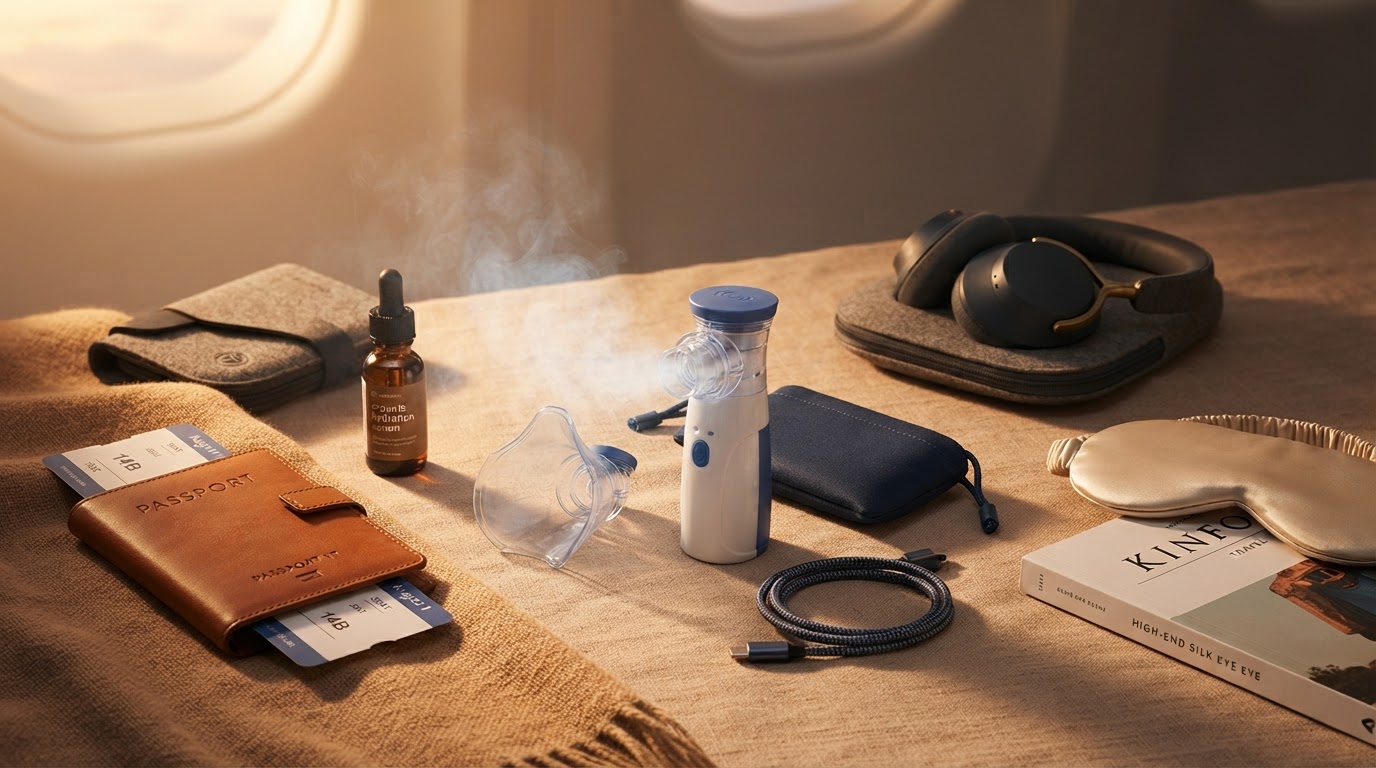
How to use Portable Smart Nebulizer Humidifier on a flight?
 Priya RamanSenior Analyst
October 4, 2026 — Utilizing a Portable Smart Nebulizer Humidifier on a flight requires a USB-compatible power source and adherence to TSA liquid guidelines, provided the device operates silently to avoid disturbing nearby passengers.
Air travel presents a specific physiological challenge because cabin humidity levels often drop below 20%, significantly lower than the 30-50% range recommended for respiratory comfort. Frequent flyers and those managing chronic conditions often seek localized hydration solutions to prevent mucosal dryness and irritation during transit. Navigating the logistics of in-flight use involves a framework of power availability, spatial constraints, and device output.
Think of it as a matrix of two primary dimensions: power source versatility and moisture delivery mechanism. When selecting a device for the cabin, two axes matter here: the physical footprint of the unit and its ability to interface with standard airline USB-A or USB-C ports without requiring high-voltage AC outlets.
Can you power a humidifier using airplane USB ports?
Yes, most modern aircraft USB ports provide sufficient amperage to power a compact travel humidifier, though users should verify if their device requires a dedicated power bank for consistent output. According to technical insights from Eneba, travel humidifiers are specifically designed to be powered on the go via USB, making them compatible with laptops, power banks, and standard travel chargers. This compatibility is crucial because airline seat power can sometimes be intermittent during takeoff and landing. The decision rule: if your device lacks an internal battery, always carry a small 5,000mAh power bank to ensure uninterrupted operation during long-haul segments where seat power might be disabled or occupied by other electronics.
For those managing specific medical needs alongside general hydration, the rechargeable nebulizer for asthma travel provides a blueprint for managing respiratory health in these pressurized environments. The integration of USB charging allows for a seamless transition from the terminal to the aircraft cabin, ensuring the device is ready for use the moment dry air becomes a factor.
How do you maintain hygiene with a personal humidifier on a plane?
Maintaining hygiene requires using distilled or bottled water and performing a rapid dry-down of the mesh or vibrating element after each use to prevent microbial growth in the recycled cabin air. Beauty Bridge notes that certain personal USB travel humidifiers, such as the iBen model, are designed to attach directly to standard-sized water bottles like Evian or Fiji, which minimizes the risk of contamination from refilling open reservoirs in cramped lavatories. This "direct-attach" method is highly efficient for air travel because it utilizes sealed, store-bought water sources that are already compliant with safety standards.
Once you see it this way, the process becomes a routine of sourcing a bottle post-security and connecting the Portable Smart Nebulizer Humidifier once at cruising altitude. This approach is similar to the strategies discussed for selecting a portable smart nebulizer humidifier for travel, where ease of cleaning and source water purity are prioritized. For travelers who are extending their journey beyond the flight, understanding how these devices function in a usb powered room humidifier for hotel rooms context ensures a consistent environment from departure to destination.
Quick answers
Q: Does the TSA allow humidifiers in carry-on luggage? A: Yes, the TSA permits portable humidifiers in carry-on bags, provided any liquid inside the reservoir or accompanying water bottles follows the 3-1-1 liquids rule (3.4 ounces or less).
Q: How much noise does a travel nebulizer humidifier make? A: Most mesh-based Portable Smart Nebulizer Humidifier units operate at less than 30 decibels, which is quieter than a whisper and well below the 80-decibel ambient noise level of a jet engine.
Q: Can I use tap water in my travel humidifier while flying? A: It is recommended to use bottled or distilled water to prevent mineral buildup on the ultrasonic mesh, as tap water in many regions contains high mineral content that can clog the device within 2-3 uses.
Learn more about Portable Smart Nebulizer Humidifier at https://portablesmarthumidifier.com.
Sources
- iBen - Personal USB Travel Humidifier - Beauty Bridge
- 7 Best Travel Humidifiers in 2026: Portable Picks for Comfort - Eneba
- Best Portable Humidifier for Travel - Canopy