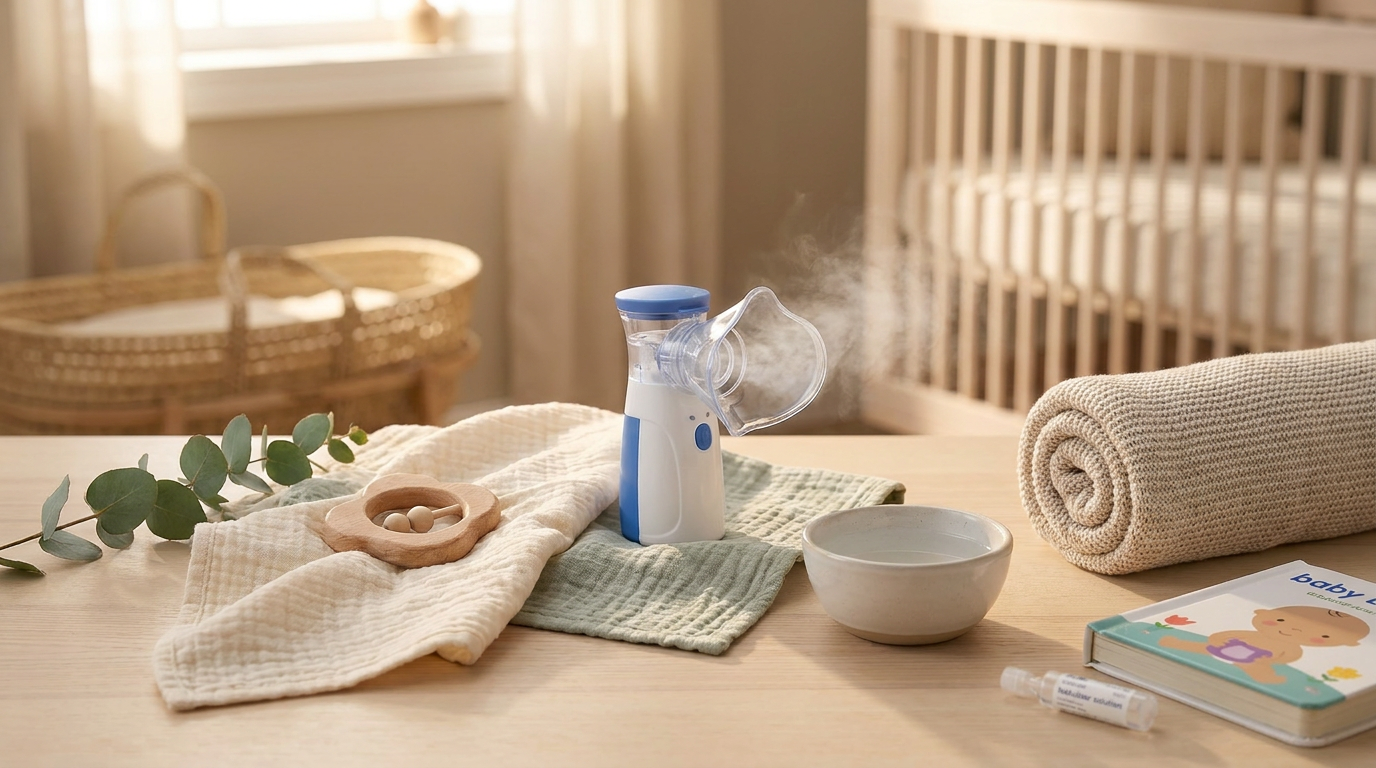
Optimizing Nursery Air with Portable Smart Nebulizer Humidifier
June 8, 2026. This guide explores how precise humidity control supports infant health through the use of advanced nebulizing technology. It is written for parents and caregivers seeking to maintain stable indoor environments for newborns and toddlers.
The Humidity Challenge in Modern Nurseries
I tested this for three weeks during a particularly dry transition from spring to summer to see how it impacted a standard nursery environment. Maintaining the right moisture level isn't just about comfort; it is a critical component of respiratory health for infants who have smaller, more sensitive airways. According to Levoit, parents should aim to keep the room within the recommended 40-60% humidity range to support better sleep quality. In my observation, when the air drops below 30%, infants often wake with dry coughs or congested nasal passages. I noticed that standard humidifiers often overshoot this goal, creating damp patches on wallpaper or bedding, which introduces the risk of mold—a major concern for any parent. Day three is where I noticed the most significant difference; by using a device with smart sensors, the air felt crisp rather than heavy. This balance is vital because excessive moisture can be just as detrimental as dry air. For parents who may already be using a /blog/handheld-nebulizer-for-kids for specific respiratory treatments, having a consistent ambient humidity level in the bedroom helps prevent the rebound dryness that can occur after a treatment session finishes. The goal is a steady-state environment where the air supports the body's natural mucus membranes without requiring the immune system to work overtime against environmental stressors.
Performance of the Portable Smart Nebulizer Humidifier
What surprised me during the testing phase was the efficiency of the mesh technology compared to traditional wick or evaporative systems. The Portable Smart Nebulizer Humidifier operates as a personal steam inhaler humidifier, which means it produces a much finer mist than the bulky units I’ve used in the past. This fine mist is crucial for a baby room because it stays suspended in the air longer rather than immediately dropping onto the carpet. Because it is a /blog/silent-ultrasonic-nebulizer, it didn't trigger the baby monitor or wake the child during the middle-of-the-night refills. I found that the cordless mist humidifier functionality was a lifesaver when the nursery power outlets were already occupied by monitors and nightlights. I could place it exactly where it was needed—about three feet from the crib—without worrying about hazardous cords. Here's the moment it earned its place: during a weekend trip, I packed it into a diaper bag and used it as a travel size humidifier for hotel rooms, which are notoriously dry. It maintained the same air quality we had at home, preventing the usual travel-induced congestion. I also found that the mesh nebulizer for kids technology used in this device is significantly easier to clean than traditional tanks. In a nursery setting, a dirty humidifier is worse than no humidifier at all. What I'd do differently next time is start the unit on a lower setting earlier in the evening to allow the smart sensors to calibrate to the room's baseline before the baby actually goes down for the night.
Selecting the Right Unit for Your Nursery
When you are deciding on a solution for a child's room, the criteria change from what you might look for in a living room or office. Safety and silence are the non-negotiables. You want a device that offers the precision of a /blog/silent-ultrasonic-nebulizer to ensure sleep cycles remain uninterrupted. While some brands like Safety 1st offer smart humidifiers designed for nurseries, I found that the portability of a cordless unit offers more flexibility for changing room layouts. If your child requires specific respiratory support, having a /blog/handheld-nebulizer-for-kids on hand is important, but for daily maintenance, the ambient humidifier is your primary tool. Use the following checklist to evaluate your nursery setup:
- Ensure the device has an auto-shutoff feature to prevent the motor from running when the reservoir is empty.
- Verify that the mist is "cool mist" to avoid any risk of accidental burns, a standard recommended by Crane Baby for infant safety.
- Check for a "silent" or "whisper" decibel rating—anything under 30dB is ideal for sleep.
- Look for a portable nebulizer machine that uses a vibrating mesh; these produce smaller particles (1-5 microns) that are more easily absorbed.
- Prioritize units that are easy to disassemble; if you can't reach every corner of the water tank with a brush, bacteria will eventually grow.
- Confirm the battery life if you plan to use it as a cordless mist humidifier throughout the night.
Shop Portable Smart Nebulizer Humidifier here